Updated: August 27, 2026
Following tooth loss, your choice of long-term replacement is a critical one that can dramatically impact your oral health and quality of life. Patients in Milwaukee and West Allis, WI, have several long-term tooth replacement options at their disposal, from traditional dental crowns to advanced solutions like All-on-4® dental implants.
Each option offers distinct benefits, making it important to understand which is the best fit for your needs. Today, we will explore dental crowns, compare them to dental bridges and dentures, and delve into the transformative potential of All-on-4 dental implants.
In short: All-on-4® dental implants typically offer the most stable, natural-feeling, and long-lasting solution for patients missing several teeth or an entire arch, while crowns, bridges, and traditional dentures remain effective options depending on the extent of your tooth loss and budget.
The Roles of Crowns in Dental Restoration
Dental crowns are commonly used to encase and protect damaged teeth that have suffered extensive decay, fractures, or wear and are too weak to support a filling. In many cases, this follows root canal therapy, in which a tooth’s damaged inner “pulp” is removed, and the remaining structure requires reinforcement.
Crowns are also an excellent long-term restoration option following tooth loss. In these cases, crowns are affixed to the tops of dental implants, restoring the form and functionality of the tooth above the gum, while the dental implant replaces the root in the jawbone.
For individuals missing several teeth, dentures and dental bridges are also effective options to consider.
Considering Dental Bridges and Dentures in Milwaukee
Dental bridges are prosthetic devices consisting of one or more false teeth. They are attached to dental crowns on the teeth adjacent to a gap created by tooth loss. While they offer a more stable and long-term solution than dentures and effectively restore functionality and appearance, bridges call for the alteration of healthy teeth, which is a significant drawback.
Dentures, on the other hand, are removable prosthetics that replace multiple missing teeth. While they are non-invasive and can be more affordable than dental implants in West Allis, dentures come with the challenges of discomfort, maintenance, and potential slippage. Unlike bridges, dentures do not require the alteration of adjacent teeth but may lack the stability and natural feel patients desire.
For patients seeking a more stable solution, All-on-4 dental implants may be the optimal choice, blending the benefits of bridges and dentures without many of the drawbacks.
| Option | Best For | Pros | Considerations |
|---|---|---|---|
| Dental Crowns | A single damaged tooth, or capping an implant | Restores single-tooth strength and appearance | Not a full-arch solution on its own |
| Dental Bridges | A few missing teeth in a row | Fixed in place, no daily removal | Requires altering healthy adjacent teeth |
| Dentures | Multiple or full-arch tooth loss | Non-invasive, more affordable upfront | Can slip; requires daily removal and maintenance |
| All-on-4® Implants | Full-arch tooth loss | Fixed, preserves jawbone density, closest to natural teeth | Requires a surgical procedure and healing time |
All-on-4 Dental Implants: A Full Smile Transformation
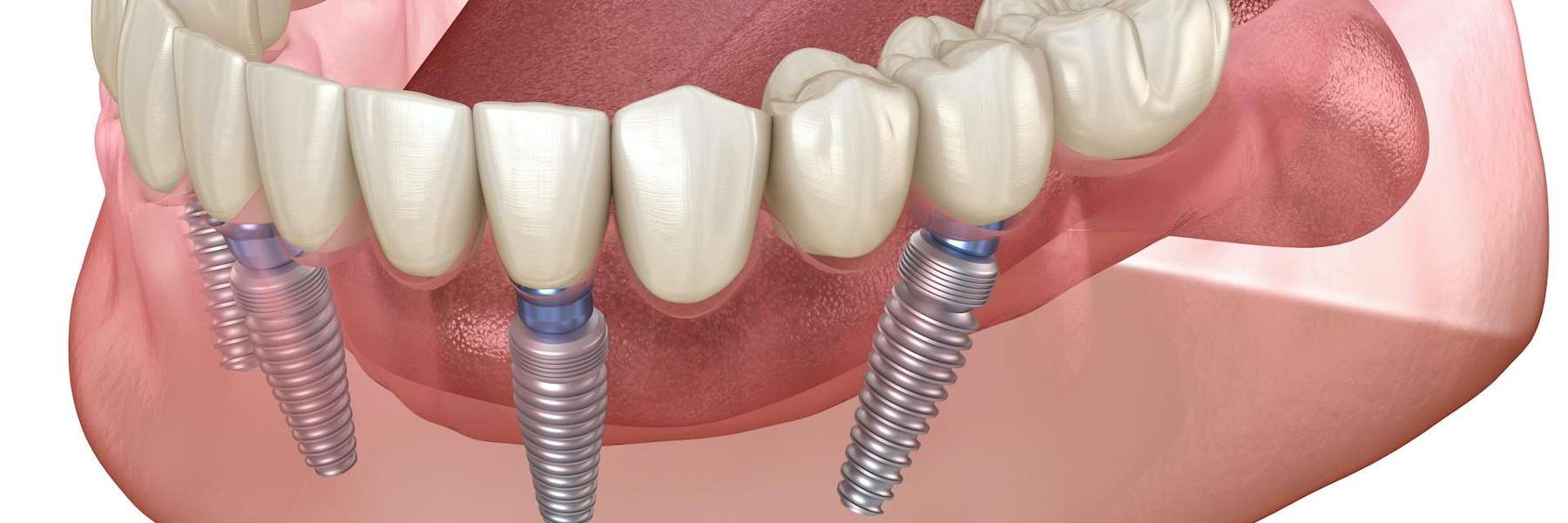
All-on-4 dental implants are a revolutionary option for those who need to replace multiple teeth or even an entire arch. This procedure is particularly beneficial for individuals who have lost several teeth to decay, injury, or gum disease. The All-on-4 method involves placing four precisely positioned implants into the jawbone. These implants will support a full set of prosthetic teeth. Unlike traditional dentures, All-on-4 implants are fixed, offering form, function, and stability that closely mimic those of natural teeth.
What is the All-on-4 Dental Implant Procedure?
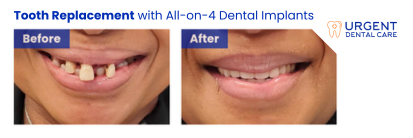 The All-on-4 dental implant procedure is a multi-step process that begins with a comprehensive evaluation. At this stage, the Milwaukee dentist assesses the patient’s overall oral health, taking detailed images and creating a customized treatment plan.
The next step involves the surgical placement of the implants into the jawbone. This is done strategically to ensure the implants are securely anchored and yield the desired functional and aesthetic benefits. Once the implants are in place, a temporary set of teeth is attached, allowing for almost immediate use. After a few months, once the implants have fully integrated with the bone via osseointegration, a customized permanent set of teeth is fitted, ensuring a confident, natural-looking smile and a comfortable and robust bite.
Benefits of All-on-4 Dental Implants in West Allis
All-on-4 implants offer several benefits over other tooth replacement options. Firstly, they provide a permanent solution that doesn’t require adhesives or removability, as traditional dentures do. This means the patient can bite, chew, speak, smile, and laugh with total confidence.
Also, All-on-4 implants provide vital stimulation that dentures and bridges cannot, helping preserve the jawbone density. This is crucial for bite integrity and facial structure, as, without stimulation, the jawbone often begins to atrophy following tooth loss. All-on-4 is also more efficient, often requiring fewer implants than traditional methods when replacing several teeth.
Finally, All-on-4 implants are designed to look and feel exactly like natural teeth, restoring a smile and bite that are virtually indistinguishable from those you were born with. This enhances smile aesthetics and boosts confidence.
Whether you’re considering dental crowns, bridges, or dentures for dental restoration in Milwaukee or are exploring All-on-4 dental implants for a complete smile makeover, consult a dental professional in West Allis to determine the best option for your specific needs.
Frequently Asked Questions
How long do All-on-4 dental implants last?
With proper care, All-on-4 dental implants can last 20 years or longer, and many patients enjoy them for the rest of their lives.
Am I a candidate for All-on-4 implants if I have gum disease?
Possibly. Active gum disease typically needs to be treated first, but many patients who have lost teeth to gum disease go on to become good candidates for All-on-4 implants once their oral health is stabilized.
How much do All-on-4 dental implants cost compared to dentures?
All-on-4 implants generally cost more upfront than traditional dentures, but many patients find the long-term value worthwhile, since implants don't require the ongoing adhesives, relines, and replacements that dentures often need over time. Schedule a consultation at Urgent Dental Care for pricing specific to your case.
Seamless Smile Restoration With All-on-4 Dental Implants in West Allis, WI
If you’re in the Milwaukee or West Allis area and looking for an experienced and highly skilled dental practice to ensure the comfort and effectiveness of your smile restoration, whether via traditional means or the revolutionary All-on-4 implant method, contact dentist Dr. Robert Feinman and the outstanding team at Urgent Dental Care in West Allis, WI, to schedule a consultation!